
Buncombe County Directory Landscape
Buncombe County people directories are kept by many offices, schools, boards, and archives. No single list covers everyone. Staff directories give work roles. Parcel records identify assessed owners. Recorded instruments list deed parties. Historical volumes connect names with spouses, occupations, and streets. Start with the directory whose keeper has a reason to record the person, then verify the entry in a second source when identity matters.
| Local directory | People represented | Keeper | How to browse |
|---|---|---|---|
| Asheville departments and boards | Officials, directors, board members | City of Asheville | Free department, roster, and meeting pages |
| Buncombe County Schools staff | District and school staff | Buncombe County Schools | Free name, school, and department browsing |
| UNC Asheville directory | Faculty and staff | UNC Asheville | Free keyword search |
| Register name index | Grantors and grantees in instruments | Register of Deeds | Free guest search; holdings reach the late 1700s |
| Tax owner roll | Assessed parcel owners | Buncombe Tax Department | Free owner, address, or PIN search |
| Asheville city directories | Residents and businesses by name, street, and type | Buncombe County Special Collections | 1883 to present in print, with selected digitization |
A government worker is best sought through the relevant agency. A teacher may fall under Buncombe County Schools, Asheville City Schools, or another institution. For a property owner, use tax and deed directories. For a past resident, the Asheville city directory run is much stronger than a current phone listing.
Buncombe Government Staff Directories
Asheville organizes public contacts through department pages, elected-official pages, and boards and commissions. Research did not locate a verified citywide employee name form, so begin with the department, board, or service. Council packets and board rosters can connect a public member with a term and civic affiliation. County pages likewise list department contacts and selected staff, while the North Carolina state phone book searches public state business contacts.
The captured Asheville department navigation shows the directory-first route:
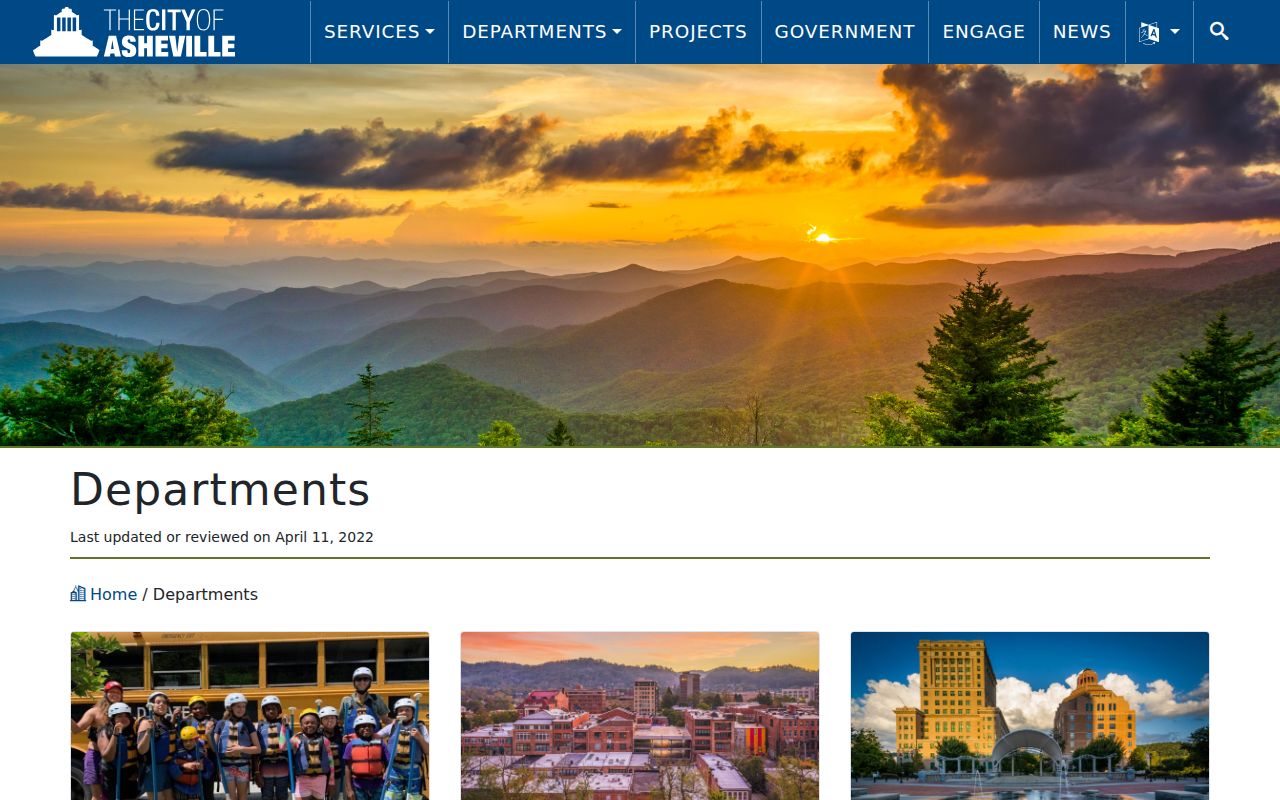
Choose the office that owns the public function, then look for a staff, leadership, contact, board, or meeting link. If no person appears, call the department main line. Do not assume an omitted employee has left.
| Display name | Full or preferred business name where published |
|---|---|
| Public role | Title, department, agency, division, or board seat |
| Work contact | Official phone and email where supplied |
| Office | Public building or mailing location when listed |
| Coverage limit | A contact directory is not a private-resident list and may omit staff |
Buncombe School and Campus Directories
The UNC Asheville directory is the strongest local higher-education name tool found in the research. Search a name or keyword, then use the department to distinguish similar names. Typical entries provide full name, title, academic or service unit, campus phone and email, and an office or building. AB Tech also publishes faculty, staff, and department contacts through its site.
| UNC Asheville control | Kind | Needed | Search use |
|---|---|---|---|
| Search directory | Text | Yes | Enter a person or name keyword |
| Department or unit | Browse or filter | No | Use campus context to narrow a name |
| Submit/Search | Button | Action | Runs the query |
The live UNC Asheville directory search makes its name-first approach clear:
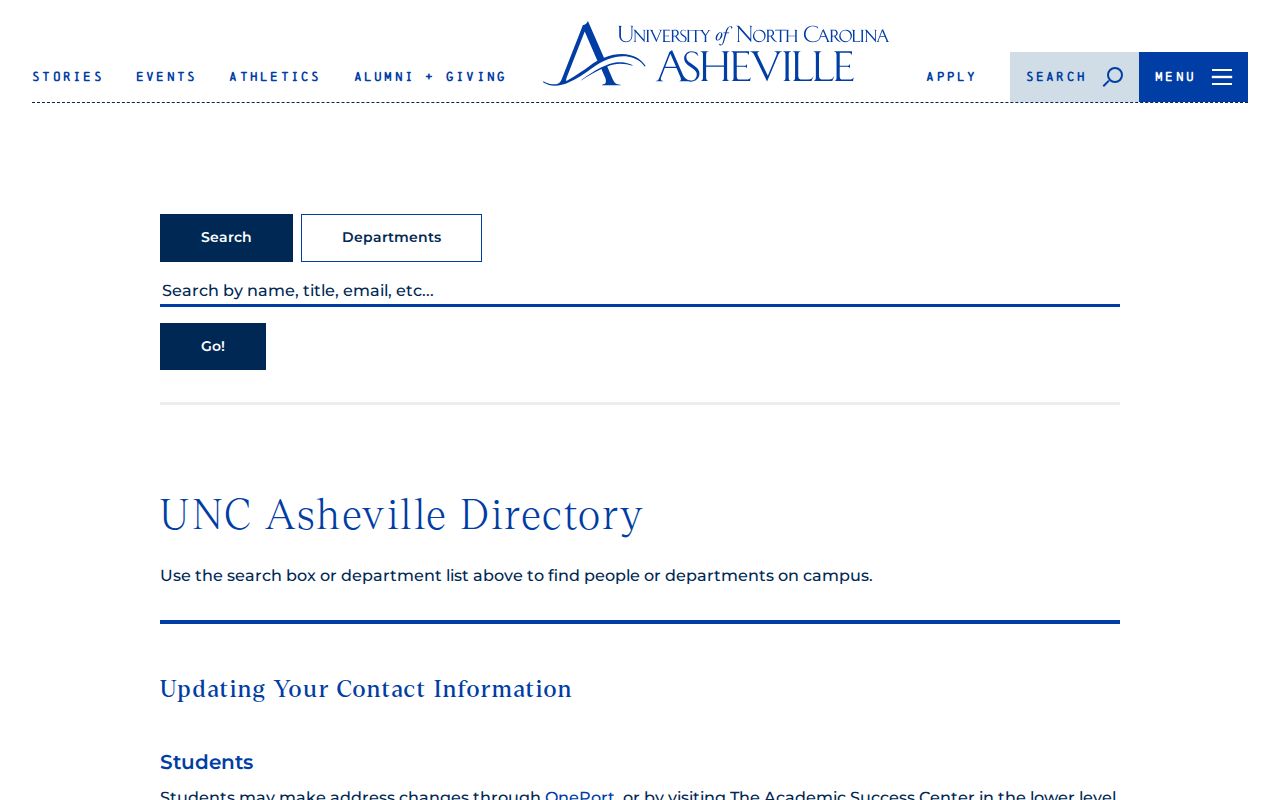
Department and office details help separate two people who share a surname. Campus entries are business contacts, not evidence of a home address.
The Buncombe County Schools staff directory supports school, department, and name browsing. Asheville City Schools is a separate district. An Asheville address may therefore call for both district sites plus charter or private-school sources.
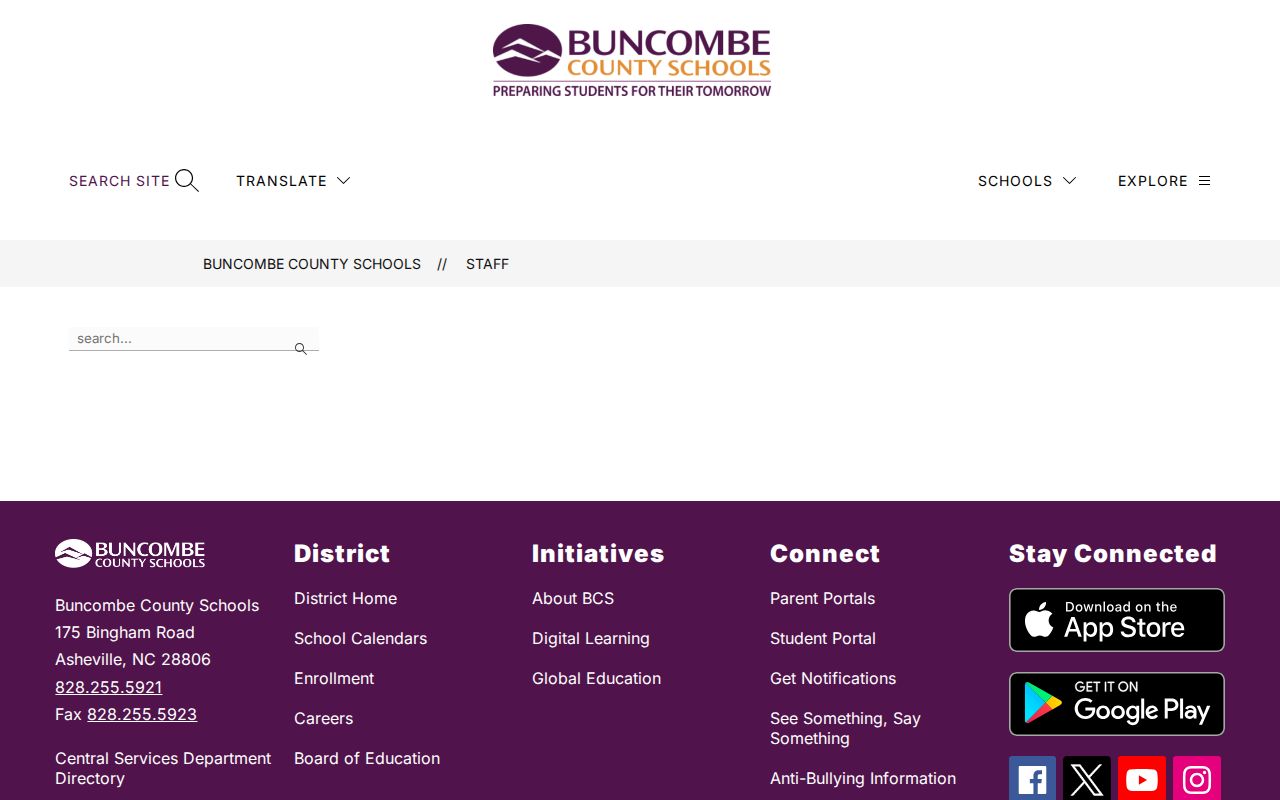
A school entry generally supplies a name, role, and official email or telephone. Use the school name as an identity check before treating two similar entries as the same person.
Buncombe Property Owner Directories
The Buncombe Tax Department turns assessment records into an owner directory. Search modes include owner name, property address, and the county’s 15-digit parcel identification number, or PIN. A parcel card may show owner names, owner mailing address, the physical site address, legal description, deed book and page, sale details, values, and GIS links.
- Mailing address
- Where the tax office sends correspondence. It may help locate an owner but does not prove residence.
- Situs address
- The physical parcel location. It does not prove who occupies the land.
- PIN
- The 15-digit parcel identifier used to tie tax, map, and ownership records together.
- Deed reference
- The book and page that point from the tax card to a recorded instrument.
GIS adds parcel boundaries and map context. PIN History can connect identifiers after a split or merger, while archived assessor books and tax scrolls bridge older owners. The tax roll identifies assessed ownership, not every resident at an address.
Note: Buncombe owner mailing and situs addresses answer different questions, and neither field alone proves who currently lives on the parcel.
Buncombe Deed Party Directory
The Buncombe County Register of Deeds guest record lookup works as a grantor-grantee directory. A grantor transfers an interest; a grantee receives one. The party side, document type, and date range help prevent unrelated people with the same name from being mixed. Results can lead to details and images, but the office does not publish one reliable cutover year for all online images.
Register holdings reach the late 1700s and include deeds, deeds of trust, cancellations, plats, powers of attorney, assumed names, and agreements. A current parcel’s book and page can point to the latest deed. That deed may identify a prior grantor and an earlier reference, creating a documented ownership chain. This directory is about parties to recorded instruments, not a complete list of Buncombe residents.
For copy rules, fees, and requests beyond the guest index, use the county’s public records access information. The public search room and mail route remain important when an image is absent online.
Buncombe Professional Name Directories
North Carolina has no single umbrella professional directory. Use the board that regulates the occupation. The State Bar, Medical Board, Board of Nursing, Licensing Board for General Contractors, Real Estate Commission, and Cosmetology Board each publish fields suited to their licenses. A result may include a name, credential number and type, current status, issue or expiration information, business address, and public discipline.
The Secretary of State Business Registration Search supports entity name, registered-agent name, company-official name, and SOS ID searches. Results can identify a legal entity, its status, formation date, offices, registered agent, officials, and filing images. Keep roles exact. A registered agent accepts official service; that role does not by itself prove ownership. An entity status is also not a quality endorsement.
County assumed-name filings can connect a business label with a registrant. Chamber and tourism directories list member organizations and public contacts, not all residents or all firms. Board and government sources are stronger for a claim about a license or legal role.
Buncombe Correctional Person Directory
The NC Department of Adult Correction Offender Public Information Search is a specialized statewide people directory. It supports name, offender number, and demographic filters. A result may show an offender ID, correctional status, convictions, sentence information, and facility or supervision details. It is not a complete criminal-history report and should not be treated as one.
The official state correctional search form illustrates its narrower purpose:
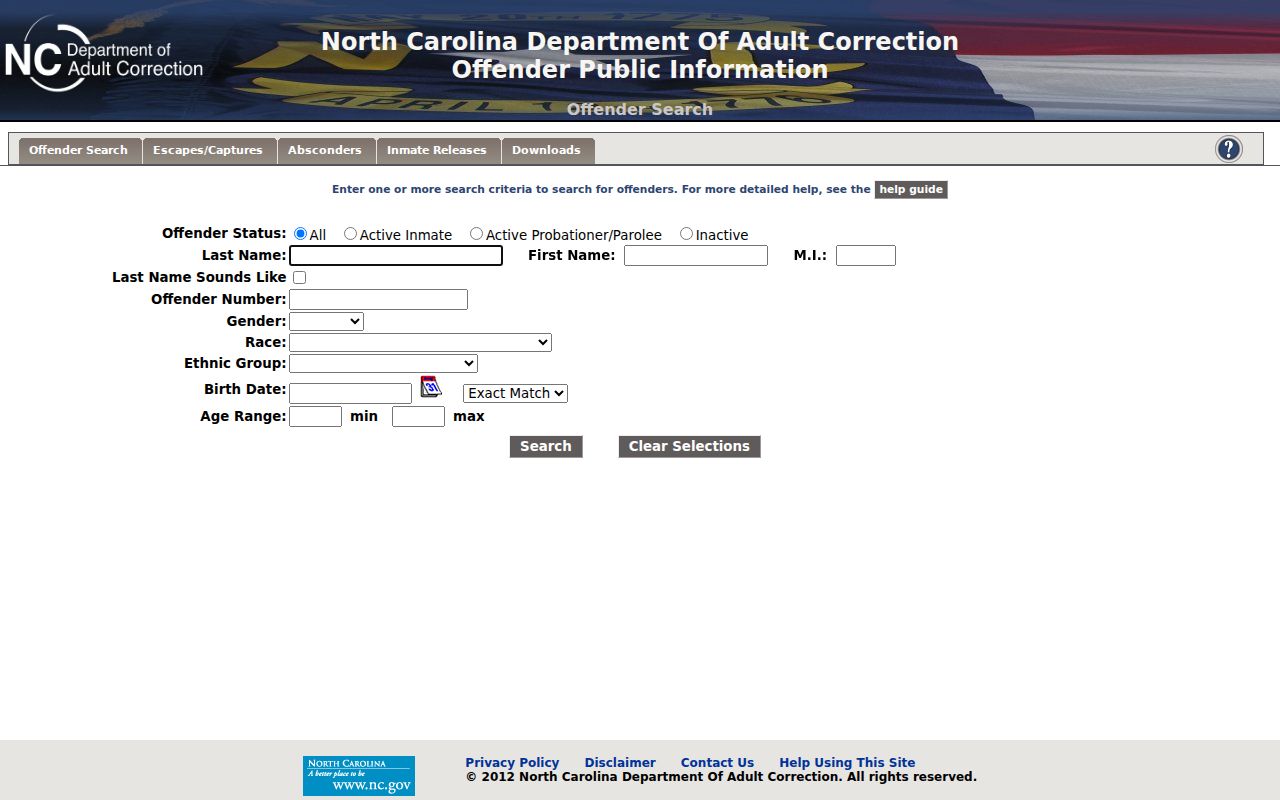
Use identifiers and dates to check a same-name result. For current local custody, the Buncombe County detention inquiry is the more relevant source. Public correctional data does not grant permission to threaten, shame, or harass anyone.
Historical Buncombe People Directories
Buncombe County Special Collections, on the lower level of Pack Memorial Library, holds Asheville city directories from 1883 to the present. The archive welcomes the public without requiring a county library card. Print volumes are available there, while selected directories are digitized through DigitalNC and Internet Archive. Exact telephone-book years were not established in the official online inventory, so check the catalog or ask staff rather than claiming a complete run.
| Directory form | Years or scope | People evidence | Access point |
|---|---|---|---|
| Asheville city directories | 1883 to present | Name, spouse, occupation, address, business, and publisher marks | Special Collections print; selected digitization |
| Street or reverse sections | Volume-dependent | Occupants arranged by street and number | Read the section and front-matter key |
| Yearbooks and phone books | Catalog-dependent | School ties, names, images, or telephone listings | Special Collections catalog and staff |
| Licensed databases | Database-dependent | Genealogy, newspaper, business, and residential entries | Library card or in-library access may apply |
Work one year at a time. Record the exact name, spouse, occupation, and address, then check the next volume for a move or change. The 1890 federal population census is mostly lost, which makes Asheville directories and tax lists especially useful for that decade.
Buncombe Directory Symbols Need Context
The Special Collections African American research guide explains that directories through 1950 could use an asterisk or another symbol to mark Black residents and businesses. The notation can help locate people whom other sources omitted or distorted, but it reflects segregation-era publishing. Read each volume’s front matter before interpreting a symbol, abbreviation, widow notation, occupation code, or homeownership mark. Publisher conventions changed over time.
An entry’s absence may reflect bias, a missed canvass, a name variant, or a move between editions. Search spouse names, middle initials, nearby adults, street sections, and business classifications. Then compare the finding with deeds, tax rolls, newspapers, church records, and census schedules. Do not repeat a historical racial label without explaining its source and context.
Buncombe Cemetery and Obituary Directories
Buncombe GIS Cemetery Finder is an unusually local crossover directory. It locates known burial grounds while also showing current parcel tax information, owner, and mailing address. That combination may identify whom to contact about access to a cemetery on private land. A current parcel owner is not necessarily tied to the people buried there, so keep the modern property result separate from the historical burial evidence.
Obituary archives can add relatives, former surnames, services, and cemetery names. Funeral-home pages and user-contributed memorial databases are finding aids, not final proof. Cross-check them against official death records, newspapers, church registers, or cemetery records. The library’s Asheville Citizen-Times archive covers 1999 to current, while older titles and local papers may require other library databases.
Buncombe Archives Beyond Directories
The State Archives’ Buncombe County group spans 726 cubic feet, 43.33 GB, and 6,908 reels. Its scale makes it more than a fallback for one missing directory. County court, estate, bond, tax, and related series can supply names when a printed volume fails. The Western Regional Archives adds named family, business, cemetery, neighborhood, and institutional collections.
Two courthouse fires, in 1830 and 1865, destroyed many court records. Land books survived much better. Search deeds, tax lists, church records, newspapers, and reconstructed files around a gap. Buncombe County was formed in 1791 from Burke and Rutherford, and its old territory was far larger, so an early family may require parent and successor county searches even when the household stayed in one place.
Note: Record the repository, collection, series, year, and name form checked so a negative Buncombe directory search can be tested later.