
Find People Through Buncombe Records
Choose the first record by the fact already known. A full name works in the Register of Deeds index, the state court portal, the voter lookup, and professional license files. An address works better in the county property search and GIS. For a person who lived in Asheville long ago, a city directory or obituary may be the best first source. Phone data is less stable, so use it to confirm a name found in an official or archival record rather than treating a number alone as proof of identity.
Common names need two points of agreement. Compare a middle initial, spouse, parcel, court role, or business role before deciding that two results concern one person. Buncombe’s mountain communities have many repeated family names. A record may also use Asheville as a postal city even when county offices, not city departments, control the land, permit, or law-enforcement file.
- Search a surname in the county deed index. Add the first name, date range, and party side only after seeing how the name was indexed.
- Check the state court party search. Filter to Buncombe County and compare the role, case type, and filing date.
- Put a known address or owner name into the property roll. Save the 15-digit parcel PIN and deed book/page reference.
- Use vital indexes, newspapers, obituaries, and city directories for family ties and older residences.
- When a web result stops short, ask the correct custodian for the index entry, image, or file by its identifier.
Note: An official index points to a record; it does not prove that every same-named result belongs to the person sought.
Buncombe County Search Offices
Three downtown offices hold different parts of a person’s record trail. The Register of Deeds keeps deeds, plats, assumed names, powers of attorney, and Buncombe birth, death, and marriage records. The Clerk of Superior Court holds estates, wills, divorce files, and civil or criminal cases. The Tax Department links owners and mailing addresses to parcels. These are separate custodians, so a deed request sent to the Clerk or an estate request sent to the Register will miss the right file. Detailed copy and request rules belong with Buncombe County public records access.
Buncombe Register of Deeds
205 College Street
Asheville, NC 28801
(828) 250-4302
Buncombe Tax Department
182 College Street
Asheville, NC 28801
Current property records
All three offices offer an offline path. The Register has a public search room on weekdays from 8 a.m. to 5 p.m. The courthouse clerk can locate permitted file material when Portal lacks a document or legacy entry. Tax staff can help with archived assessor books, tax scrolls, and parcel history. Bring a book/page, case number, or PIN when possible.
Search Buncombe Deed Names
The Register’s guest index is a deep name source. Its land books begin in the late 1700s, although the office does not state one reliable cutover year for online images. Start with a surname or firm name. Then narrow by first name, filing dates, record class, and party side. A grantor transfers an interest; a grantee receives it. Searching both sides can reveal sales, gifts, deeds of trust, releases, and other recorded ties.
The Buncombe Register guest search shown here offers Quick Name Search, Book/Page Search, image viewing, and record details.
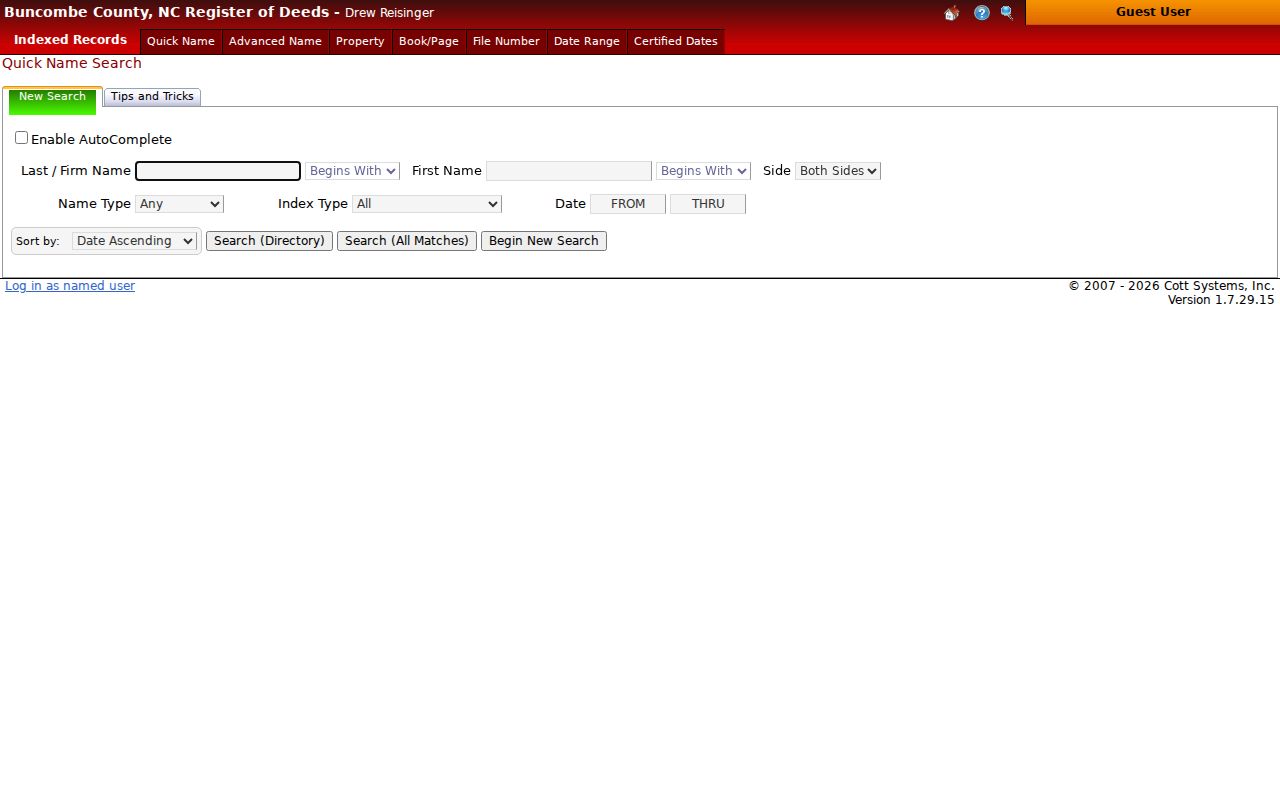
Results can show filed and instrument dates, grantors, grantees, record type, file number, book/page, references, amount, and available image pages. The description is marked “Not Warranted,” so read the instrument before relying on a short index label.
| Search control | How to use it | Why it helps |
|---|---|---|
| Last / Firm Name | Enter a surname or organization | Finds indexed parties |
| First Name | Add after the surname | Reduces common-name matches |
| Side | Choose grantor, grantee, or both | Separates transfer roles |
| Date pair | Set a filing range | Targets the right period |
| Book / Page | Use the separate mode | Opens a known reference |
Search Buncombe County Court Records
North Carolina Superior and District Courts serve Buncombe through District 40. The statewide eCourts Portal accepts a party or business name, case number, citation, attorney name or bar number, cross-reference, or nickname. Filter to Buncombe County when a name produces statewide matches. A case summary may identify parties and roles, court, case type, status, filing events, hearings, charges, dispositions, financial entries, and public document links.
The eCourts Smart Search image shows the public interface used for Buncombe name and case searching.
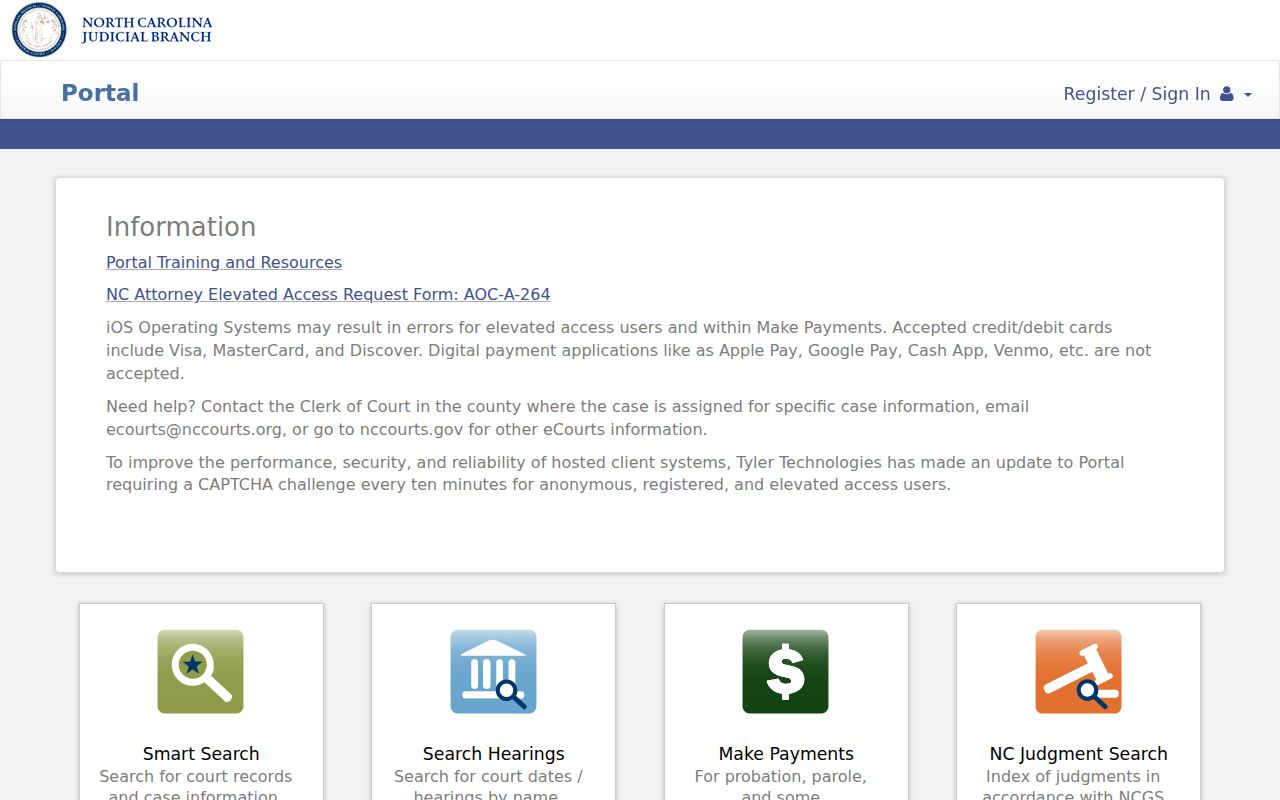
The screen is a doorway, not the whole courthouse file. Sealed and expunged matters, juvenile records, adoption files, protected victim details, confidential family material, exhibits, and some older material do not become public merely because Portal exists. Ask the Clerk for a permitted plain or certified copy when an entry lacks the needed document.
| Court source | People evidence | Search route | Fallback |
|---|---|---|---|
| Superior Court | Felony, larger civil, estates and special proceedings | eCourts Portal | Clerk file |
| District Court | Misdemeanor, infraction, smaller civil and family matters | Portal and calendars | Clerk file |
| Western District of NC | Federal civil, criminal and bankruptcy parties | PACER | Federal clerk or NARA |
Buncombe Court Records Go Digital
Buncombe entered eCourts on July 22, 2024, as part of the state’s Track 5 conversion. Odyssey became the case-management and filing system, while Portal expanded public Smart Search. Statewide implementation finished on October 13, 2025. Those dates matter when comparing a filing with an older clerk index. Some earlier summaries migrated, but availability differs by case and document.
Hurricane Helene then disrupted western North Carolina courts and agencies in September 2024. Judicial orders changed deadlines and courthouse operations. A gap, delayed filing, or stale address in that period may reflect disaster disruption as well as the digital conversion. Record the event date, the filing date, and the system date separately. For a negative search, ask whether the file remains in a legacy system, paper storage, or an archive.
Note: The clerk counter remains the sound fallback for confidential, non-migrated, archived, or document-level court material.
Trace Buncombe County Property Records
A street address can lead from land to people. The Tax Department search accepts an owner name, property address, or 15-digit parcel PIN. A parcel card may show owner names, the owner’s mailing address, the property’s physical address, legal description, deed book/page, sale history, acreage, values, tax district, and links to the GIS or tax bill. The assessed owner may be a person, trust, estate, or company.
The Buncombe property and tax search provides the official interface for an owner, address, or PIN.
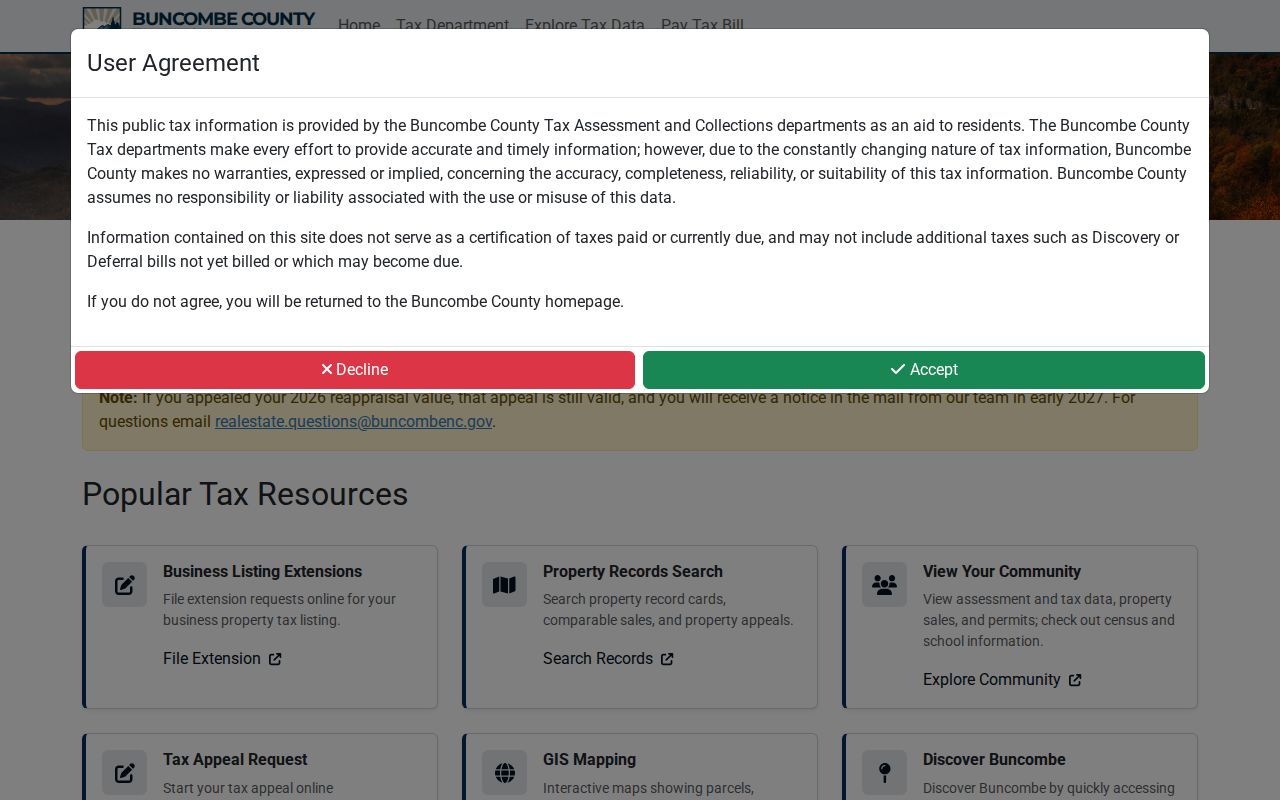
Save the PIN and deed reference from the result. Open the deed, identify its prior grantor and any earlier book/page, then repeat to build a chain of title. PIN History helps when a parcel was split or merged. Archived assessor books and tax scrolls bridge older periods. County GIS updates on weekdays, but the county advises users to verify conclusions drawn from map layers.
Mailing is not occupancy. The owner mailing address is where tax correspondence goes. The situs address is the taxed land. Neither field alone proves where a person lives.
Map Buncombe County Search Boundaries
An Asheville mailing line does not always mean a property is inside Asheville. Buncombe also includes Black Mountain, Weaverville, Woodfin, Biltmore Forest, Montreat, and broad unincorporated areas. Arden, Candler, Fairview, Leicester, and Swannanoa are common postal or community labels. Use county GIS to confirm each government layer before requesting a permit, police report, code case, or school record.
Discover Buncombe links one address with property facts, voting districts, schools, libraries, parks, and incident geography. Full GIS adds parcel boundaries, aerials, and other layers. Cemetery Finder is an unusual research tool because it pairs burial-ground location with current parcel owner and mailing data. It may identify whom to contact about access to a cemetery on private land without claiming that the current owner is tied to those buried there.
- PIN
- The county’s 15-digit parcel identifier, which may change after a split or merger.
- Situs
- The physical location of the taxed parcel.
- Mailing address
- The destination for tax correspondence, which may be far from the parcel.
- Book and page
- The recorded location of an instrument in the Register’s land books.
Find Buncombe County Vital Records
The Register of Deeds issues Buncombe birth, death, and marriage certificates. Orders may be made in person, online, or by mail. North Carolina law limits certified copies to the person named, immediate family, an authorized agent, or a legal representative under N.C.G.S. §130A-93(c). A searchable marriage or historical index entry does not make the underlying certificate open to all.
Divorce follows a split route. The Clerk of Superior Court holds the decree and court file; NC Vital Records holds statewide certificate data. Adoption records are sealed, and a public-record request cannot bypass Chapter 48. The research found no simple rule that all modern certificates become public after a fixed number of years, so eligibility should be checked with the office rather than inferred from age.
For family history, use Register indexes, State Archives holdings, church registers, newspapers, cemetery records, and lawful genealogy collections. Delayed birth files may hold affidavits and family evidence, but access limits still apply. A person seeking adoption information must use North Carolina’s official court, intermediary, or consent process.
Buncombe County Voter Lookup
The state voter lookup can confirm a registered name in Buncombe and return status, precinct, districts, party, polling place, registration date, and participation history where public. It never shows ballot choices. Enter the registered first and last names and select Buncombe County. A failed match means only that those values did not find a displayed record.
The NCSBE Voter Search image shows the name and county fields used for an individual lookup.
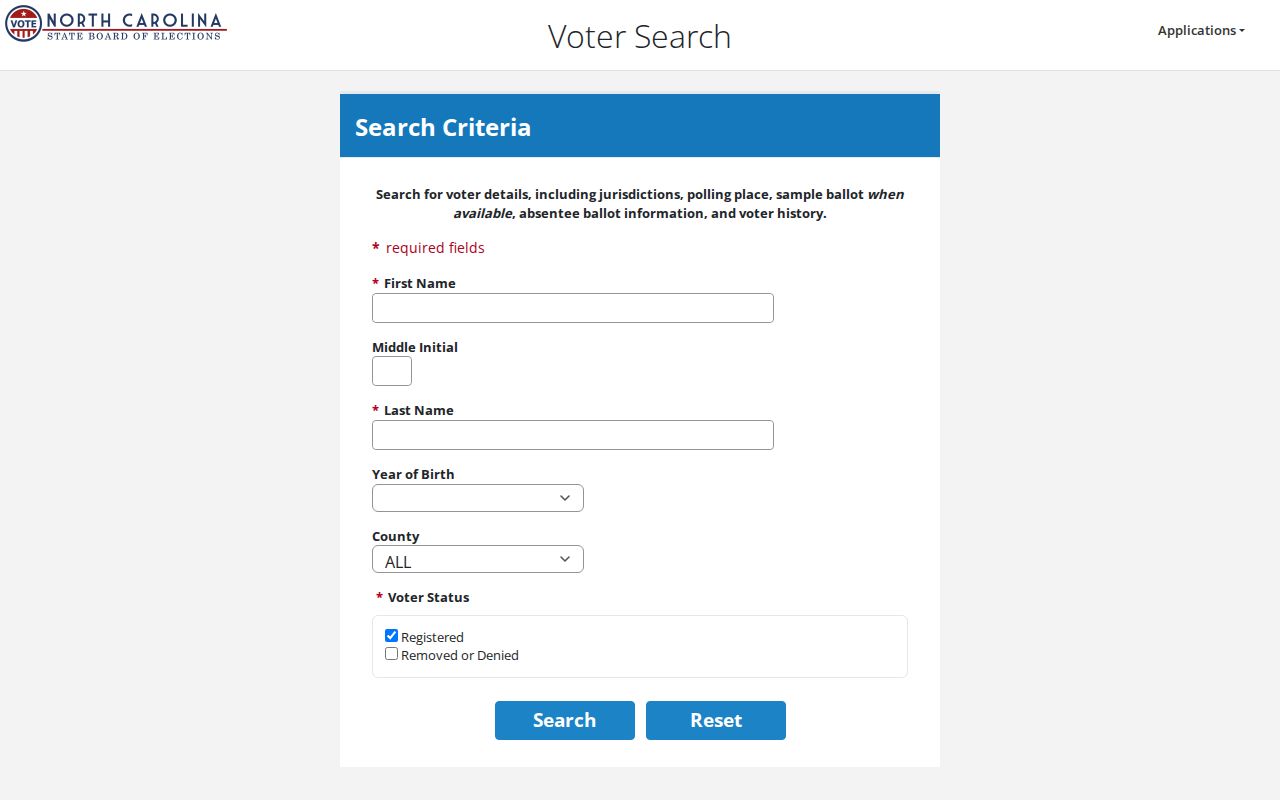
Full date of birth, signature, Social Security number, license or ID number, email, and protected addresses remain confidential. North Carolina also posts free current and historical voter files, but the voter page explains their layouts and limits in depth. Use the Buncombe County voter records walkthrough before working with those larger files.
Search Buncombe County People Directories
Pack Memorial Library houses Buncombe County Special Collections, which welcomes researchers without requiring a county library card. Its Asheville city directory run covers 1883 to the present. Volumes may arrange people alphabetically, by street, and by business class. That street section creates a historical reverse search: find an address, note the occupant and spouse, then move through nearby years.
Entries can supply an occupation, employer, home address, spouse, and publisher marks. Read each volume’s abbreviation key before copying an entry. Directories through 1950 could use a symbol to identify Black residents and businesses. That notation reflects segregation-era publishing and must be interpreted as historical evidence, not repeated without context.
Library resources also include Ancestry Library Edition, NC LIVE, a full-text Asheville Citizen-Times archive from 1999 forward, and business or residential directory data. Some products require a card or in-library use. Digitized volumes appear selectively through DigitalNC and Internet Archive, while print and archival help remain essential for missing years and hard-to-read scans.
Find Buncombe County Heirs
An heir search needs a chain of sources, not a surname guess. Begin with the decedent’s estate case at the Clerk. Petitions, notices, and permitted filings may state names, addresses, or legal roles. Compare those names with an obituary, jointly held deed, marriage index, city directory, and death record. A witness, executor, neighboring owner, or person with the same last name is not automatically a relative.
For an older family, search place names as carefully as surnames. Buncombe was formed in 1791 from Burke and Rutherford, and its former territory was far larger. A household can seem to move when county lines changed around it. Search township, creek, valley, post office, municipality, parent county, and successor county forms. Asheville directories, tax lists, newspapers, and census records can fill years when court or vital evidence is weak.
Note: The mostly lost 1890 federal census makes Buncombe directories, tax lists, voter lists, and newspapers especially useful for that decade.
Search Buncombe Licenses and Claims
Business and professional records help separate roles. North Carolina’s Secretary of State search can find an entity, registered agent, company official, or SOS ID. A registered agent receives legal papers and is not necessarily the owner. County assumed-name filings can connect a trade name with a registrant, while board searches identify licensed professionals and public credential status. Relevant boards include the State Bar, Medical Board, Board of Nursing, General Contractors, Real Estate Commission, and other occupation-specific regulators.
Unclaimed property offers another name trail. The official NCCash search shown here uses owner names and can associate a result with a city or reporting holder.
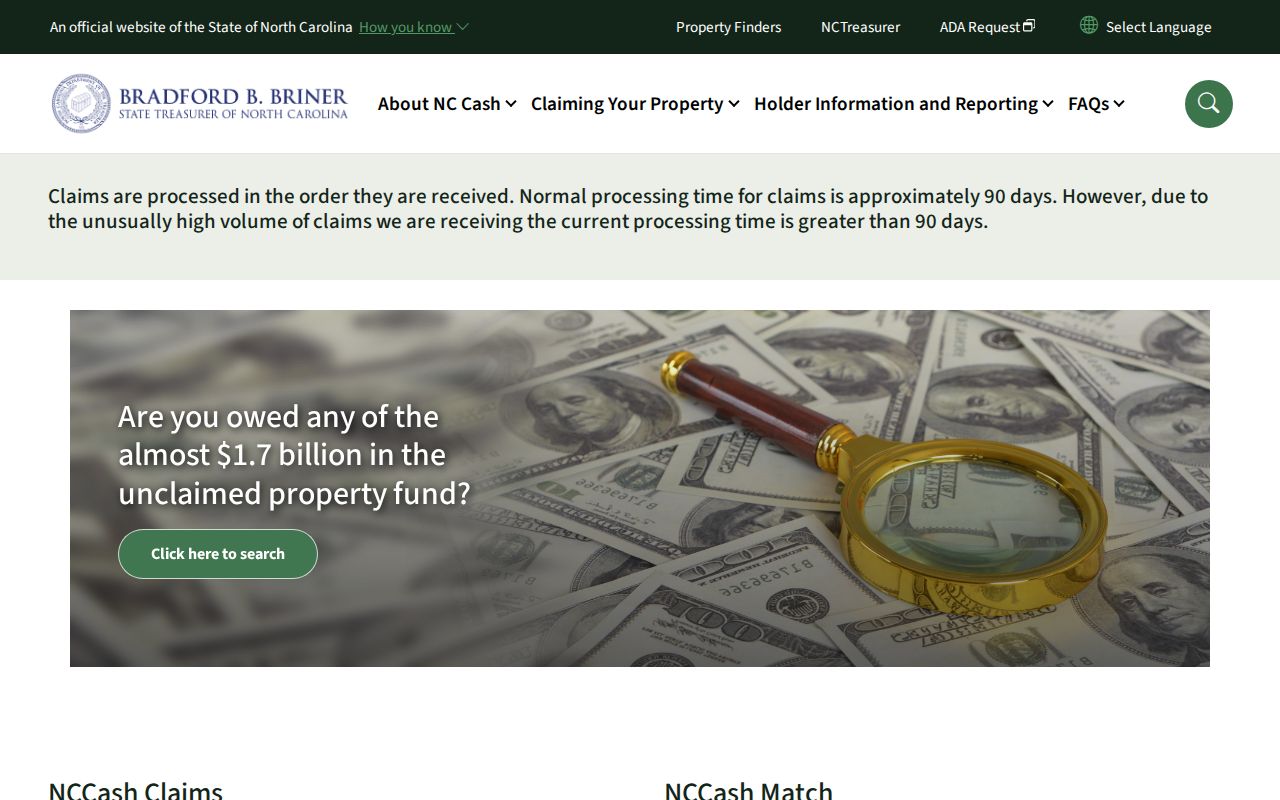
A match can support a later-location lead, but it does not confirm a present address or relationship. Claim only through the Treasurer’s official process. Avoid any unsolicited service that demands a fee to reveal or recover state-held property.
| Official source | Name relationship | Main limit |
|---|---|---|
| Register index | Grantor, grantee, assumed-name party | Role varies by instrument |
| Secretary of State | Agent or company official | Not proof of ownership |
| License board | Licensee or regulated firm | Board coverage differs |
| NCCash | Reported owner and city | May be an older tie |
Compare Buncombe County Search Sources
Official records and commercial people finders serve different roles. A county index identifies its custodian, record type, and filing reference. A commercial compilation may bring together phones, emails, relatives, and addresses from public and licensed data, but it can lag corrections or merge two people. Use a compiled result as a lead, then confirm it against the office that made or received the record.
| Source type | Best use | What to verify |
|---|---|---|
| Official index | Locate a deed, case, parcel, registration, or license | Read the source record and current status |
| Office file | Obtain permitted detail or a certified copy | Identity, redactions, and record scope |
| Archive or directory | Trace an older address or family | Publisher codes, dates, and name variants |
| Commercial compilation | Generate a possible lead | Every key fact with an official source |
Free web access is not the same as a free certified copy. Register guest searching, property lookup, GIS, voter search, and many license checks are free. Certification and office copy fees can apply. The Register also offers a free Property Check alert when a document is recorded under a registered name, but an alert monitors filings and cannot prevent fraud.
Protect Buncombe County Search Subjects
Public access is not consent to contact, threaten, expose, or harass someone. Use the least personal detail needed for a lawful family, estate, historical, civic, or fraud-prevention purpose. Never try to uncover an Address Confidentiality Program participant’s true address. North Carolina’s program gives qualifying survivors and family members a substitute address and mail forwarding, while agencies protect the underlying data.
Official images may also contain identifiers that should not be online. N.C.G.S. §132-1.10 lets a person request removal of a Social Security number, taxpayer ID, driver or state ID number, passport number, financial account or card number, or PIN and password from an online official-record image. The written request must identify the document and exact location. The custodian may not charge for that redaction.
Use records lawfully. Do not republish sensitive details or use a Buncombe County search to stalk, harass, threaten, or harm any person.
Buncombe County Records Fire Gaps
Courthouse fires in 1830 and 1865 destroyed many Buncombe court records. A missing will, minute, or case paper from those eras may reflect loss rather than a failed name search. Land books survived much better. Rebuild a trail with deeds, tax lists, church records, newspapers, later estate material, and city directories when available. State Archives finding aids should be checked by record series and year.
The surviving State Archives county record group is large: 726 cubic feet, 43.33 gigabytes, and 6,908 reels. That scale explains why one portal cannot represent Buncombe’s full people record. The Western Regional Archives adds named family, cemetery, business, and community manuscripts. Special Collections supplies local directories, photographs, maps, family files, and organizational material. Record a negative finding with the exact series and dates searched.
Buncombe’s land books also contain the Register’s Slave Deeds project, which indexes instruments that recorded sales of enslaved people. These records can identify enslaved persons, enslavers, witnesses, and places, but their wording comes from a coercive system. Cite the original image and describe each person’s recorded role with care.